
One Design System Across the Whole UCP Playground

The UCP Playground shipped its 0.11.0 release this week, and it's the kind of change that's easy to undersell as "we tidied up the design." What actually landed is more structural: every surface of the harness now runs on a single design system.
Inspector, Agent, session history and replays, Conformance, the docs, and the homepage each used to carry small differences — a menu that behaved slightly differently here, a badge that meant one thing in one view and rendered another way somewhere else. They now share one visual language: a single menu component, consistent rail panels that link straight to their own docs page, one verdict-and-badge vocabulary, and the same type and colour tokens everywhere. It's non-breaking — nothing moved and nothing was retired, so existing sessions, targets, and Collections work exactly as before.
Why a test harness earns more from consistency than most products
For a lot of software, a design pass is polish. For a tool people use to measure something, it's closer to calibration.
The Playground is where you watch an AI agent actually try to transact against a real store — search, add to cart, check out — and read back what happened. If a "pass" in Conformance looks or reads differently from the same verdict in a session replay, you hesitate: is that the same result, or not? One verdict vocabulary across every surface means a reading in one place means the same thing in another. That's what lets you trust what you're looking at instead of re-learning the interface each time you move between views.
The rail panels now linking to their own docs page is the small version of the same idea: the explanation of what a number means sits one click from the number itself.
Docs, rebuilt against the shipped product
The other half of the release is the documentation — moved onto the same design system, and, more to the point, rewritten against what the product actually does today. Every page now matches the shipped behaviour: the funnel variants, all thirteen shopping outcomes documented accurately, an API reference covering every endpoint with real examples, and no stale flows left over from earlier versions.
For a developer tool that might be the most valuable part. Docs that quietly drift from the product are worse than none; these now track it.
A big refactor underneath — and a desktop version on the way
Unifying six surfaces onto one design system wasn't only a visual pass. Underneath it was a large refactor: shared components, one menu, one verdict vocabulary, one set of tokens, so parts of the harness that were built and maintained separately now sit on common foundations.
That groundwork was deliberate, because it makes the single most-requested thing on our list finally practical — a desktop version of the Playground, which we've started building after a lot of demand for it. A consolidated, component-based harness is far easier to ship as a native app than six bespoke surfaces would have been. It's early, and we'll have more to say when it's closer — but it's underway.
Where it fits
The Playground is one half of how we look at agentic commerce. UCP Checker reads what a store declares — breadth across the whole market. The Playground tests what actually happens when an agent shows up and tries to buy — the runtime side. A single design system makes that second vantage legible end to end: 20 runnable models, three funnel variants, thirteen outcomes, and wire-log replays, all read through one consistent lens.
If you haven't put a store through it, pick a model and watch it shop — the whole session, every tool call and response, there to replay.
About UCP Checker
UCP Checker is the independent validation and observability layer for the Universal Commerce Protocol — measured from two vantages: what a business declares it supports, and what actually happens when an agent transacts. The UCP Playground is the second of those vantages — the open test harness where anyone can watch an AI model shop a live UCP store, end to end, and read exactly what the agent sent and got back.
Sources
Check your domain's UCP status
See if your storefront is ready for agentic commerce in seconds.
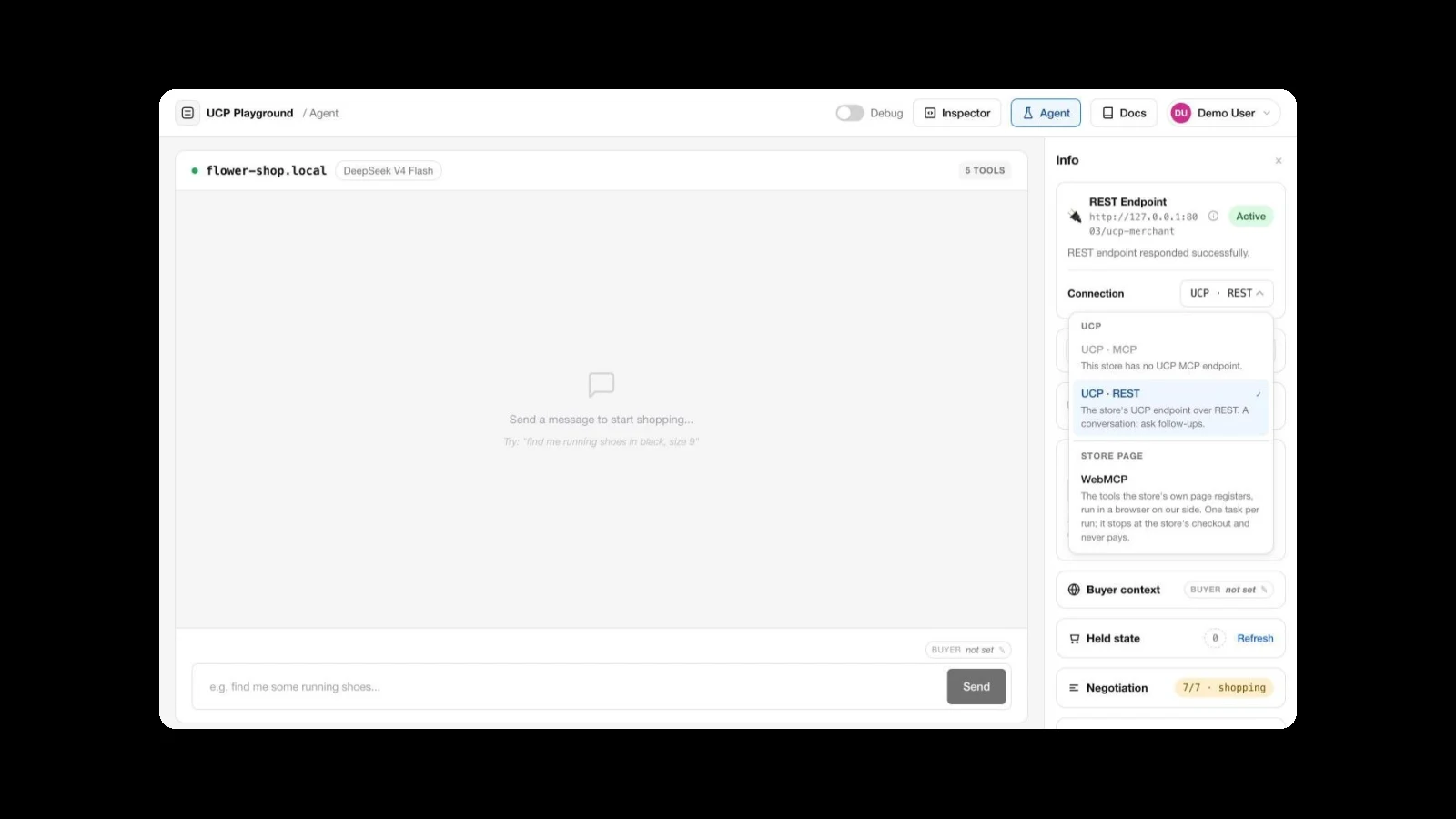
Shop through the store page: WebMCP runs in Playground 0.22.0
Playground 0.22.0 runs an agent through the tools a store page registers (WebMCP), keeps every run as a replay with scre...
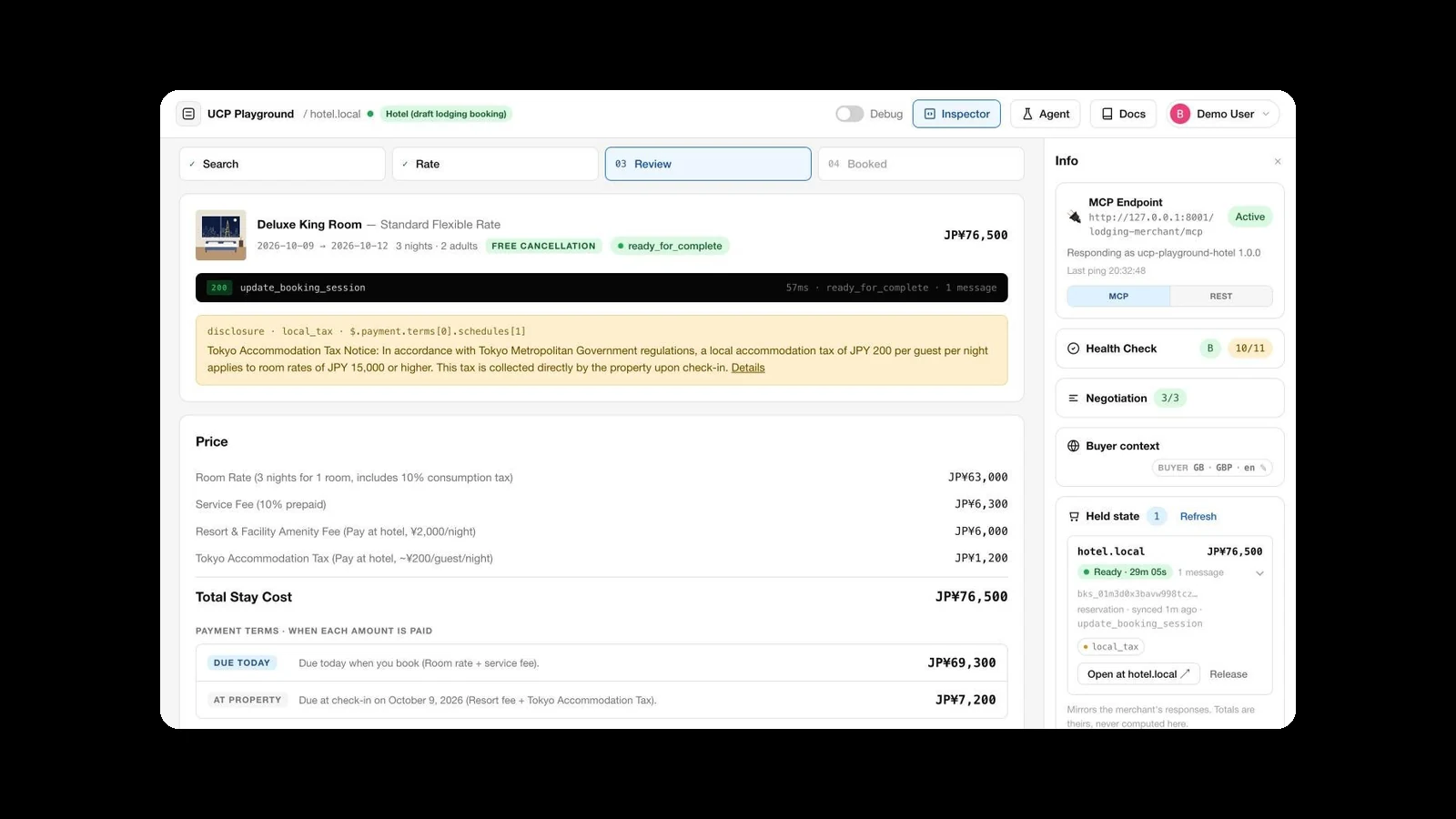
Book a room over UCP: a hotel test store in Playground 0.17.0
hotel.local is a test store for the draft UCP lodging booking capability. Book a room by hand in the Tool Inspector, or...
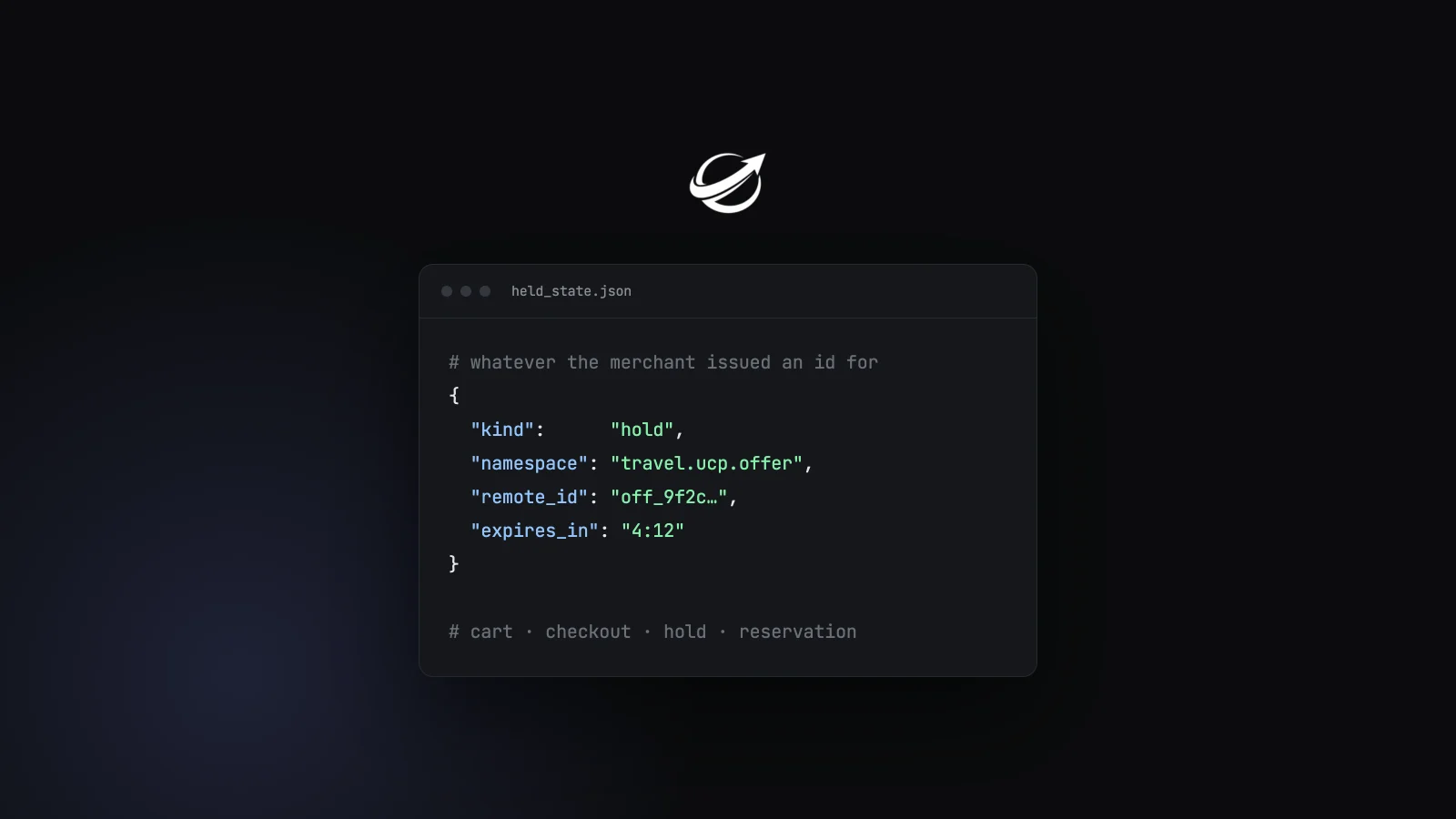
What the merchant is holding for you: Playground 0.12.0
Three additions to the Tool Inspector and Agent runs. A held-state ledger that mirrors whatever a merchant issued an id...
Get the agentic commerce digest every Monday
Real adoption data, ecosystem trends, new spec versions, and the stores that broke or recovered this week. Read by founders and engineers building the next generation of commerce.