
Introducing Wire-Level Tool Inspection: See Every Byte Your Store Sends an Agent

When an agent shops a store and something goes sideways, the question is always the same: what actually crossed the wire? The agent says it failed — but did the request go out malformed, or did the store hand back a 200 with an empty body and let the agent draw its own conclusions?
See every byte
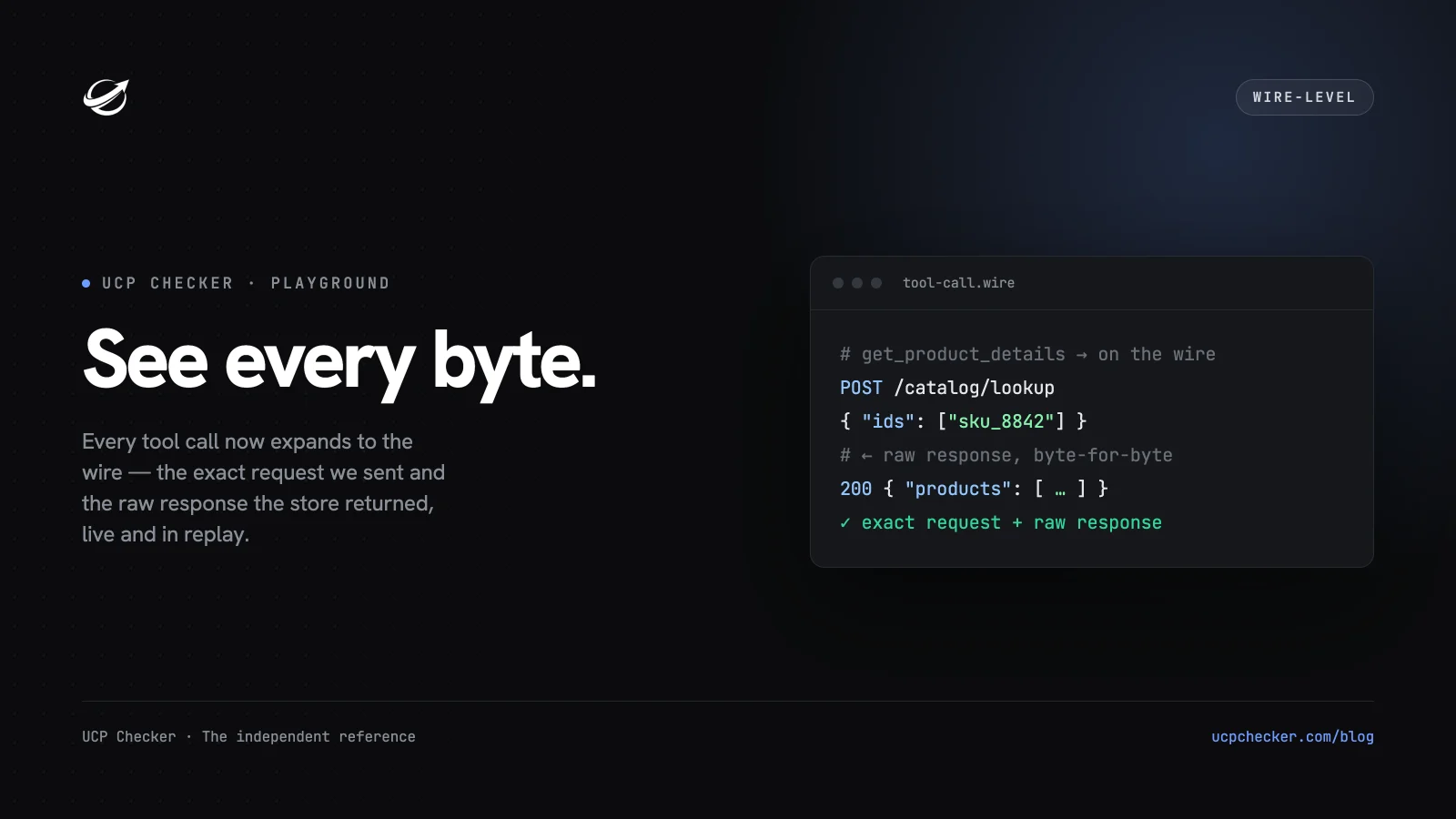
Every tool call in a Playground session — live and in replay — now expands to the wire level. Open any step and you see exactly what happened between the agent and the store:
- The transport, method, and URL — MCP or REST, the verb, the endpoint.
- The real request body we sent — including the translation from the agent's friendly tool arguments into the spec's shape. A "get product details" call becomes a
POST …/catalog/lookupwith an{"ids":[…]}body, and you see both sides of that mapping. - The raw response the store returned — exactly as it came back, untouched.
This turns "the agent said it failed" into "here's the precise 200-with-empty-body the store returned at this step." No separate tool, no guessing — the request/response pair sits right in the timeline next to the call that produced it.
To be clear about scope: the inspector reveals the merchant exchange — the protocol traffic between agent and store. It's the store's behaviour you're auditing, byte for byte.
Fewer mystery failures
The inspector is most useful when sessions don't crash out before you can read them, so we hardened a few rough edges:
- Structured tool results no longer choke the agent. Stores that return object- or array-shaped tool results used to trip a class of crash. That's gone.
- Failed calls explain themselves. A store error with a non-JSON or empty body now shows its real HTTP status and body instead of a bare
null— and error labels no longer imply a transport step that never actually happened.
Together with the inspector, that means a failed run is now a readable artifact, not a dead end.
A refreshed model bench — 14 models, 6 providers
We also brought the whole lineup up to current frontier versions and added two new families.
Upgraded to the latest:
- Claude Opus 4.8 (was 4.6) and Claude Sonnet 4.6 (was 4.5)
- GPT-5.5 (was 5.2)
- Gemini 3.5 Flash (was Gemini 3 Flash)
New arrivals:
- DeepSeek V4 Pro — the V4-generation successor to V3.2, our prior top checkout performer.
- Llama 4 Maverick — Meta's current open-weight flagship, replacing the 2024-era Llama 3.3 70B.
That's 14 models across 6 providers — Anthropic, OpenAI, Google, xAI, DeepSeek, and Meta — still runnable up to five side-by-side on the same prompt. We also retired a couple of models the providers stopped serving, so no more dead-end runs.
One honest note: the newly added and upgraded models don't have Playground benchmark numbers yet. They're being run now, and the leaderboard will fill in as sessions accumulate. We don't publish numbers we haven't measured.
Try it
Pick any two of the 14, run the same prompt against a real UCP store, and watch them diverge — then expand a tool call and see exactly why. Run it on the web at UCP Playground, or dock it beside any store with the Playground side-panel extension.
About UCP Checker
UCP Checker is the independent validation and monitoring layer for the Universal Commerce Protocol. We crawl, validate and grade every public UCP manifest we can find, run the merchant directory, the UCP Score and live adoption stats, and — through UCP Playground — test how real AI agents behave against real stores.
- Try the Playground: ucpplayground.com
- Check your store: ucpchecker.com/check
- Grade it (UCP Score): ucpchecker.com/score
- Browse the directory: ucpchecker.com/directory
Check your domain's UCP status
See if your storefront is ready for agentic commerce in seconds.
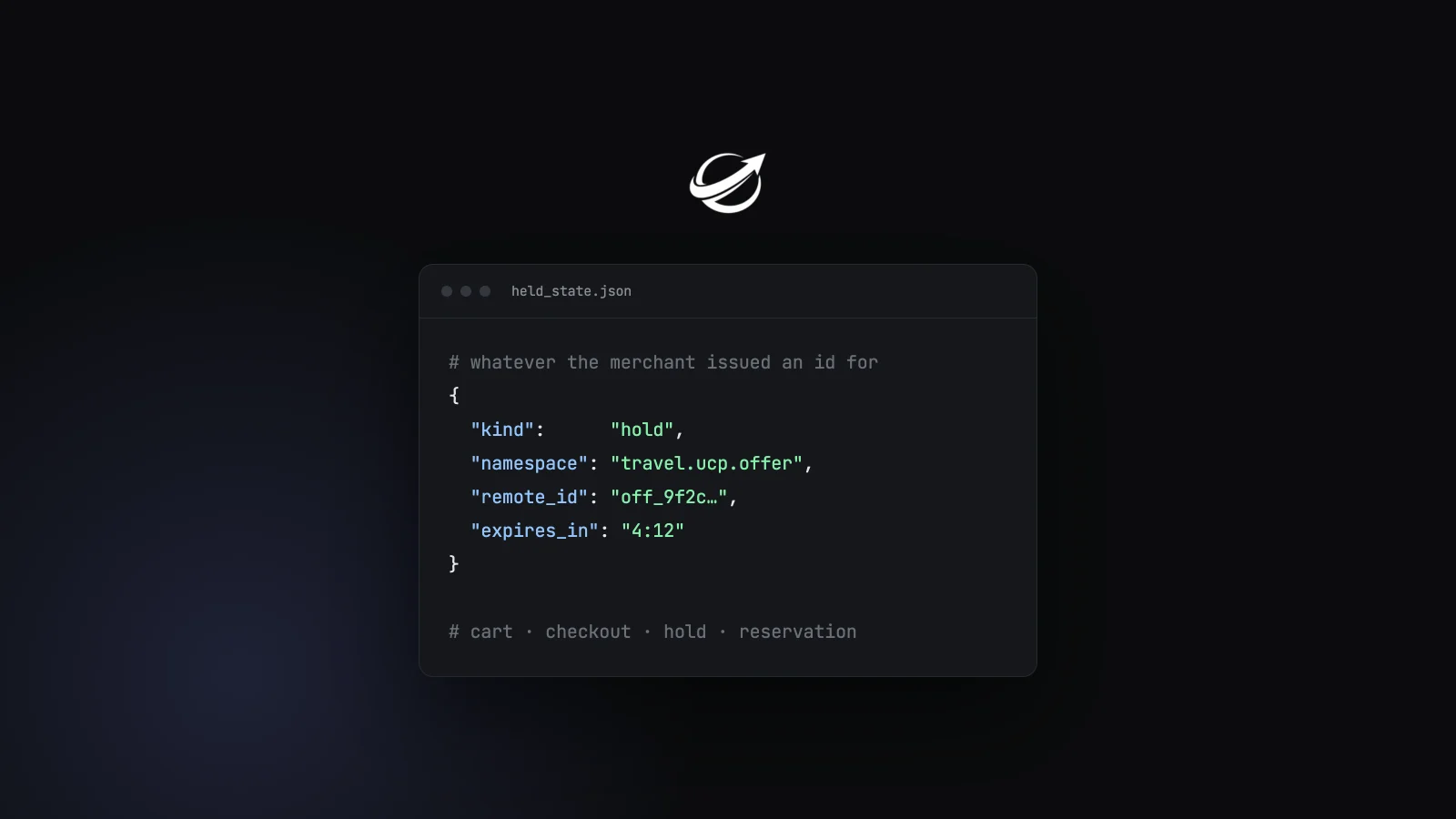
What the merchant is holding for you: Playground 0.12.0
Three additions to the Tool Inspector and Agent runs. A held-state ledger that mirrors whatever a merchant issued an id...
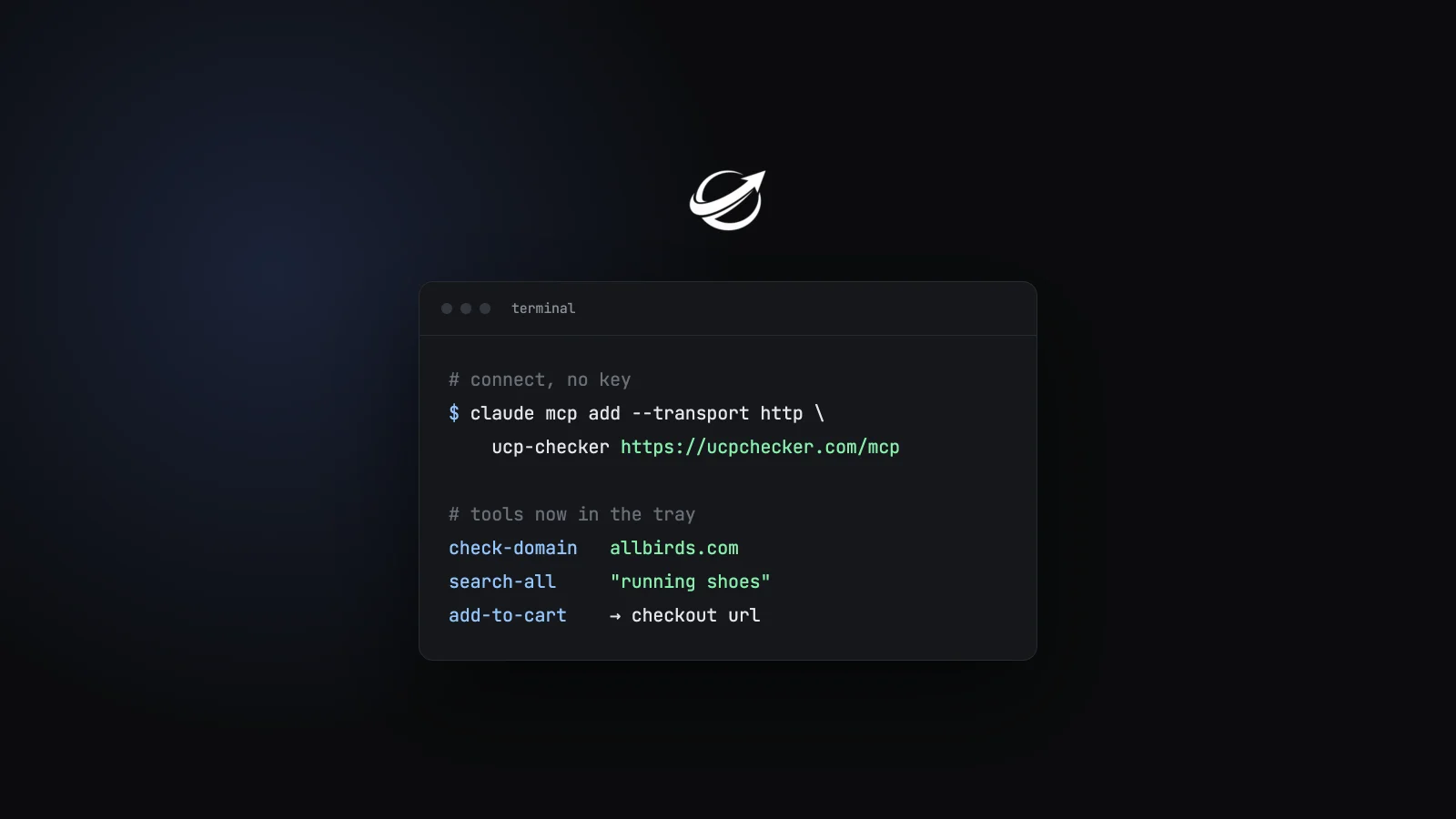
Connect Any Agent to Every Verified UCP Store: the MCP Server, the ARD Finder and Two Skills Are Live
One snippet and your agent gets check-domain, search-all and add-to-cart in its tool tray — backed by the verified list....
One Design System Across the Whole UCP Playground
Inspector, Agent, session replays, Conformance, the docs, the homepage — every surface of the Playground now shares one...
Get the agentic commerce digest every Monday
Real adoption data, ecosystem trends, new spec versions, and the stores that broke or recovered this week. Read by founders and engineers building the next generation of commerce.